

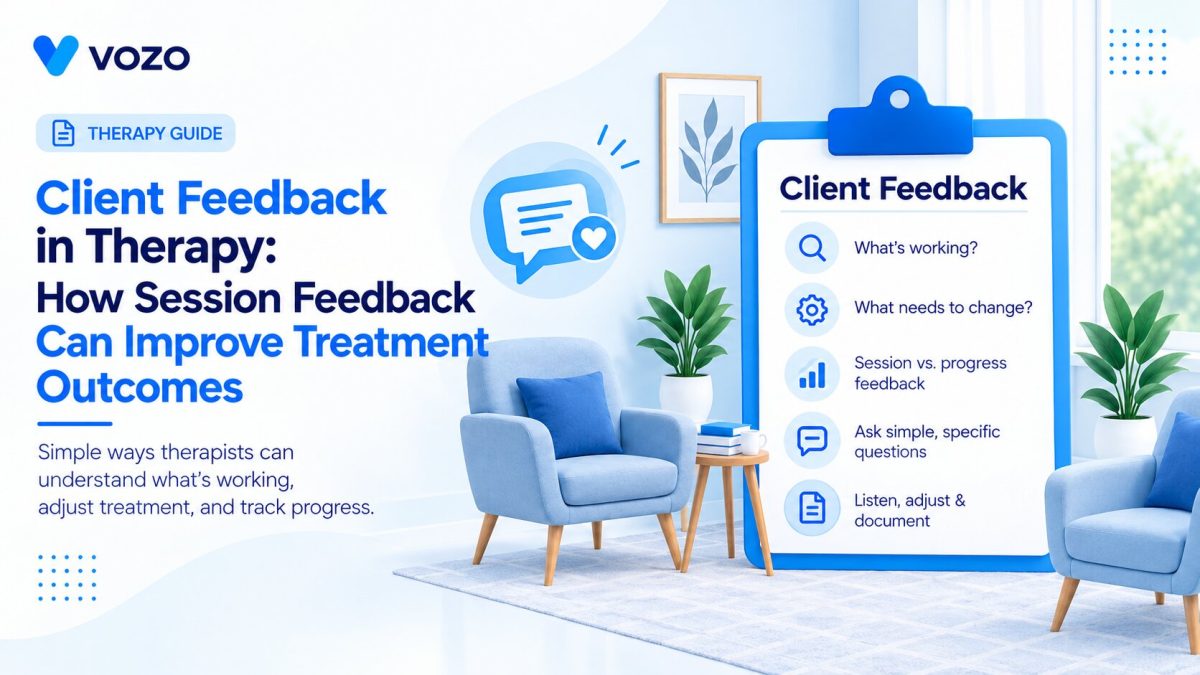
Client Feedback in Therapy: How Session Feedback Can Improve Treatment Outcomes
A therapy session can feel productive from the therapist’s side while the client walks out feeling something was missed. Maybe they wanted to talk about one issue, found a technique hard to use, or left with a question they didn’t get to ask.
These things aren’t always obvious during the appointment.
A simple conversation about the client’s experience can bring that information to light. It helps therapists see what clients find helpful, where they’re struggling, and whether something should change in the session.
The point of client feedback isn’t to grade the therapist. It’s to understand how treatment is landing for the client and adjust when needed.
Key Takeaways
- Client feedback helps therapists understand what’s working and what may need to change in treatment.
- Session feedback and progress feedback provide different views of how therapy is going.
- Regular feedback can help therapists identify concerns early and make timely treatment adjustments.
- Using direct questions and structured measures can make client feedback easier to collect and review.
- Documenting relevant feedback and treatment changes helps support continuity and informed treatment planning.
What Is Client Feedback in Therapy?
Client feedback in therapy is what a client shares with their therapist about how treatment is going for them. It can include how a session felt, whether they feel heard, how fast or slow the pace is, and whether they’re making progress toward their goals.
It can also cover a specific technique or the relationship between client and therapist. For example, a client may understand a coping strategy but have trouble using it outside therapy. Another might feel that a concern they mentioned earlier hasn’t been addressed.
Feedback can also be about the relationship. A client may want less or more direction, or more time to talk about certain topics.
The American Psychological Association describes psychotherapy as a process and encourages clients to share concerns when a session doesn’t go well so the therapist can adjust treatment when needed.
The value of feedback comes from what the therapist does with it, not just from collecting it.
Why Does Client Feedback Matter?
Therapists can’t catch everything that happens between appointments.
A client might understand something during the session but struggle to apply it later. They may feel differently about a treatment goal after a week. They may also notice one part of therapy is helping while another isn’t.
Feedback gives the therapist another view of what’s happening.
Research on routine outcome monitoring, where therapists regularly collect client feedback and review it during treatment, suggests that it can produce small improvements in outcomes on average.
Some research suggests the benefits may be greater for clients who are not progressing as expected, particularly when feedback is paired with tools that help therapists respond to the information.
That doesn’t mean feedback automatically improves treatment. It is another source of information that can help the therapist identify concerns, discuss them with the client, and decide whether treatment needs to change.
When Should Therapists Ask for Feedback?
There’s no need to turn every session into a feedback session.
A therapist might simply ask near the end:
“Was there anything you wanted to spend time on today?”
or
“Did anything from today not feel useful?”
Feedback can also be useful when something changes, such as after introducing a technique, reviewing goals, or noticing that progress has slowed.
Some practices use measures at points in treatment. Others rely on conversation. The approach depends on the client, the therapy, and what the therapist wants to learn.
What Questions Can Therapists Ask?
Feedback questions don’t need to be formal or rehearsed.
A therapist might ask:
- “Was there anything today that didn’t feel useful?”
- “What would make our next session more useful for you?”
- “Do you feel like we’re working on the things that matter most to you?”
- “Does therapy feel too fast, too slow, or about right?”
- “Is there anything you’d like us to do differently?”
A simple “How are you feeling about today’s session?” can open the door. A specific question may make it easier for the client to explain.
What If a Client’s Feedback Is Negative?
Some clients stay silent about their concerns because they worry about upsetting their therapist or assume the therapist knows best. That makes negative feedback harder to get, and more valuable when it comes.
When it does come, try to stay curious rather than defensive. A good reply is, “I’m glad you brought that up. Can you help me understand what wasn’t working?” You don’t have to agree with every comment. The goal is to understand what the client experienced and decide together whether something should change.
It also helps to invite criticism early, for example: “If something isn’t working for you, I’d really like to know.”
Some clients find it easier to speak up away from the room. Letting them raise concerns through secure messaging or a short form between sessions can make that first step less awkward.
Session Feedback vs. Progress Feedback: What’s the Difference?
They answer different questions.
Session feedback asks, “How did today go?”
Progress feedback asks, “Are things getting better?”
Progress feedback follows change over time, such as shifts in symptoms, daily functioning, or other treatment goals. Looking at both gives the therapist a fuller picture of how therapy is going.
Track Client Feedback and Progress in One Place
With Vozo EHR, you can assign assessments, review scores and trends, and document changes in the same place.
What Should Therapists Do With the Feedback?
Asking is only half the work. What happens after the client answers matters more.
A client might tell you the breathing exercise made sense in the room but fell apart at work. That’s a hint to ask what got in the way. Sometimes the technique needs a clearer walk-through. Sometimes it just needs rehearsing a few more times before it holds up outside the office.
Other kinds of feedback get the same treatment. If a client feels rushed or feels a concern never got enough time, the next step is to find out more and adjust.
Close the Feedback Loop
It also helps when the client sees their feedback was heard.
For example, a therapist might say:
“I heard that we were going too quickly, and I want to adjust that starting now.”
That small response shows the client their feedback wasn’t just recorded and forgotten.
The research on outcome monitoring says something similar. Collecting scores or comments doesn’t do much by itself. It helps when the therapist actually looks at them and changes something.
Documenting Client Feedback
Don’t skip the notes. If a client says sessions feel rushed, and you slow down, write that down along with the change. It takes a minute and makes it much easier to pick up where you left off. Just keep it relevant to treatment and in line with your practice’s policies.
Does Feedback Have to Be Formal?
No.
A short conversation may be enough for one session. In some cases, a structured questionnaire or outcome measure might help track changes across appointments.
Structured measures give therapists and clients something to review together. A direct question may work better when the issue is more immediate.
There’s no need to collect data just because a feedback tool is available. It should have a purpose. It should fit how the therapist works with the client.
Tools Therapists Commonly Use
Therapists may also use short measures when they want to track progress across sessions.
- ORS and SRS: The Outcome Rating Scale (ORS) is used to track areas of client well-being and functioning, while the Session Rating Scale (SRS) focuses on the client’s experience of the session and therapeutic alliance.
- PHQ-9: A 9-item measure used to assess depressive symptoms over the previous two weeks.
- GAD-7: A 7-item measure used to screen for generalized anxiety disorder and assess anxiety severity.
These measures provide structured information about symptoms, functioning, outcomes, or the session experience. They do not replace clinical judgment or direct conversation with the client.
Which tool fits depends on the client and the focus of treatment. A short conversation can work just as well.
Make Client Feedback Easier to Manage With Vozo EHR
Feedback usually ends up scattered across clinical documentation, messages, appointments, and assessments. Keeping it in one place makes it easier to find and use.
With Vozo EHR, you can:
- Assign assessments through Outcome Measures and review responses, scores, severity levels, and trends over time.
- Document clinically relevant feedback and treatment changes in clinical notes.
- Let clients complete assigned assessments through the patient portal and communicate securely with providers between visits.
Frequently Asked Questions
What are some specific techniques for gathering client feedback in therapy?
Therapists can ask a few direct questions at the end of a session, use a short rating scale, or use a structured outcome measure at regular points in treatment. Looking back at earlier feedback and asking whether anything has changed can also open up useful conversations.
How can therapists use client feedback forms in therapy?
A feedback form can ask about the session, treatment goals, the therapeutic relationship, or how the client feels they are progressing. Short forms are easier to use regularly, while structured measures can help therapists compare responses over time and spot changes that may need attention.
What digital tools help therapists collect client feedback effectively?
Patient portals, online assessments, secure messaging, and EHR-based outcome measures can make feedback easier to collect and review. Some systems also let therapists see responses and trends over time. The useful part is having the information available when the therapist needs to discuss it with the client.
How can therapists implement client feedback loops in private practice?
Start by asking for feedback, then take time to review what the client said. Discuss anything that needs clarification, make changes when appropriate, document the important details, and check back later. This keeps feedback connected to the treatment instead of treating it as a one-time questionnaire.
What are the benefits of routine outcome monitoring in therapy?
Routine outcome monitoring gives therapists a way to track changes across treatment and notice when a client may not be progressing as expected. Research shows small overall benefits, with stronger effects in some cases for clients who are not on track. It does not work equally well for everyone.
About the author
Lara Dixit


Lara Dixit is a Senior Business Manager at Vozo Health, specializing in EHR platforms, practice management, billing, and revenue cycle optimization. She helps healthcare providers improve operational efficiency, streamline workflows, and drive sustainable practice growth. At Vozo Health, she focuses on business strategy, healthcare automation, and scalable growth for modern medical practices.