
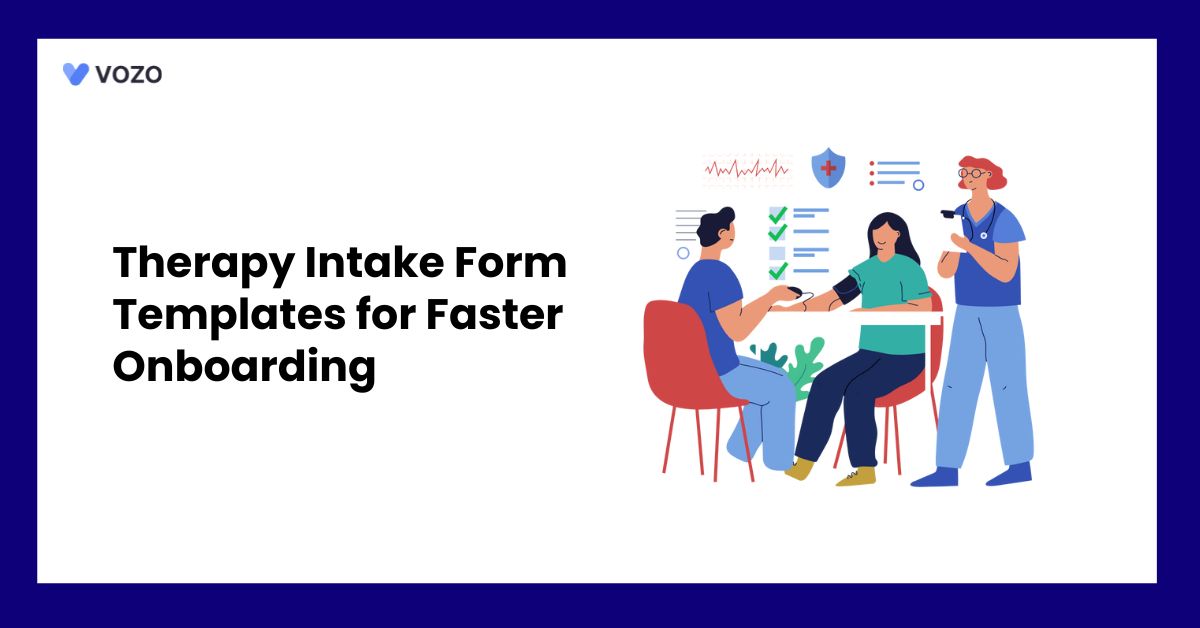
Therapy Intake Form Templates for Faster Onboarding
The therapy is a process that is significant to the clients, and the success of the intake process will spell out the success of the therapeutic relationship.
The therapy intake forms are essential instruments that can be applied to facilitate the process of client boarding and measuring essential data to develop individualized therapy.
This blog discusses why properly developed templates of therapy intake forms can make the onboarding process straightforward and easy, increase the accuracy of documentation, and become more efficient.
What are Therapy Intake Forms and Why Do They Matter?
Therapy intake forms are structured as reports, which are completed by new clients prior to or during the commencement of counseling. They collect important information such as demographic information, the symptoms manifested, medical and mental history, treatment objectives, and consent.
The use of therapy intake forms will provide therapists with reliable and detailed information that will help them design effective sessions on the first day.
Developed intake therapy forms also serve a significant administrative and legal purpose- particularly when the forms comply with the requirements of HIPAA that ensure the security of the health information.
To therapists, simplified intake saves time on repetitive queries, quicker scheduling, and better quality of records.
Essential Sections in a Great Therapy Intake Form
To produce a good template, it is essential to balance completeness and ease of use. Key areas to include are:
- Client demographics: Name, date of birth, contact details, and insurance (Basic) identifying information.
- Current symptoms and concerns: An overview of the emotional or behavioral problems of the client at the moment. In order to make templates consistent across all new clients, therapists consider developing a therapy onboarding checklist.
- Past: Mental health, health, therapeutic, or medication history to guide the treatment plan.
- Therapy objectives: Counseling goals and expectations of the client.
- Consent forms: Authorization of treatment, privacy policies, and data usage.
- Contact in case of an emergency: Name and phone number in case an urgent contact is required.
Paper vs. Digital Therapy Intake Forms
The discussion on paper and digital therapy intake forms revolves around efficiency, client experience, and security.
| Feature | Paper Intake Forms | Digital Intake Forms |
| Efficiency | Requires printing, scanning, and physical storage. | Client completes forms before the first session. Data auto-populates. |
| Compliance | Forms must be physically secured (locked cabinet). | Uses secure, encrypted platforms (EHR/Practice Management) for HIPAA-compliant therapy intake forms. |
| Client Experience | It can feel tedious and time-consuming in the waiting room. | Convenient and professional; can be completed on any device. |
| Keyword Focus | Physical storage, manual filing. | Digital therapy intake workflow, secure encryption, automation. |
How to Choose the Right Template for Your Practice
The appropriate intake form template for the therapy will be determined in accordance with your specialty and the population of patients:
Individual Counseling: It is necessary to have a wide and blanket template that deals with personal history, trauma, and substance use.
Couples/Family Therapy: The form should have certain areas relating to relationship history and family-of-origin concerns, which all the parties will complete.
Specialized Practices: You are to have specialized therapy assessment forms with deep and specific questions with respect to the diagnosis.
You will always have a basic template, as the template above, and then tailor the clinical history section to the issues you treat most. It is this specialization that makes a generic form an invaluable clinical instrument.
Related: The Essential Tools for Managing Group Therapy Practice Effectively
Frequently Asked Questions
1. What is an intake form supposed to be?
Main information includes demographics, symptoms, mental health, and medical history, therapy objectives, informed consent, and emergency contacts.
2. What is a therapy intake packet?
It consists of a set of documents such as the intake form, consent agreements and privacy notices, and other pertinent forms clients sign to initiate therapy.
3. Are the forms of therapy intake digital?
Yes, online forms are more widespread and offer such advantages as quicker processing, more convenient access, and security that would be HIPAA-compliant.
Vozo EHR for Mental Health Practice
Though many Mental Health EHR solutions are available on the internet, Vozo stands in a separate line by offering exceptional solutions for Mental Healthcare Professionals.
Vozo has a wide range of key features like an advanced user-friendly interface, seamless integration with mental health tools, accurate reporting, analytics, specialized templates for mental health, etc.
Our exceptional solution for All Levels of Mental Healthcare Practice.
- Vozo has an advanced, user-friendly interface, so even non-techy healthcare professionals and staff members can handle and manage it with ease.
- Our Support team will have your back 24/7. Whenever you need technical support, our team will assist you.
- Vozo’s Subscription plan is budget-friendly and benefits all levels of healthcare practices.
- Data Migration to the Vozo EHR system is made easy, yet our support team will assist you.
- We provide comprehensive training and ongoing support for healthcare professionals and staff members.
- Vozo complies with regulatory standards and ensures high data safety and security.
“Empower Vozo’s Mental Health EHR Solution for Mental Health Patient Outcomes. Sign up and get a free demo.“
About the author
Lara Dixit


Lara Dixit is a Senior Business Manager at Vozo Health, specializing in EHR platforms, practice management, billing, and revenue cycle optimization. She helps healthcare providers improve operational efficiency, streamline workflows, and drive sustainable practice growth. At Vozo Health, she focuses on business strategy, healthcare automation, and scalable growth for modern medical practices.