Keep Support Plans Connected
Neurodevelopmental and IDD EHR Software for Lifespan Support
Manage person-centered plans, DSP documentation, HCBS services, scheduling, incident records, and billing with connected IDD EHR software designed for long-term support workflows.
What Long-Term IDD Support Actually Requires
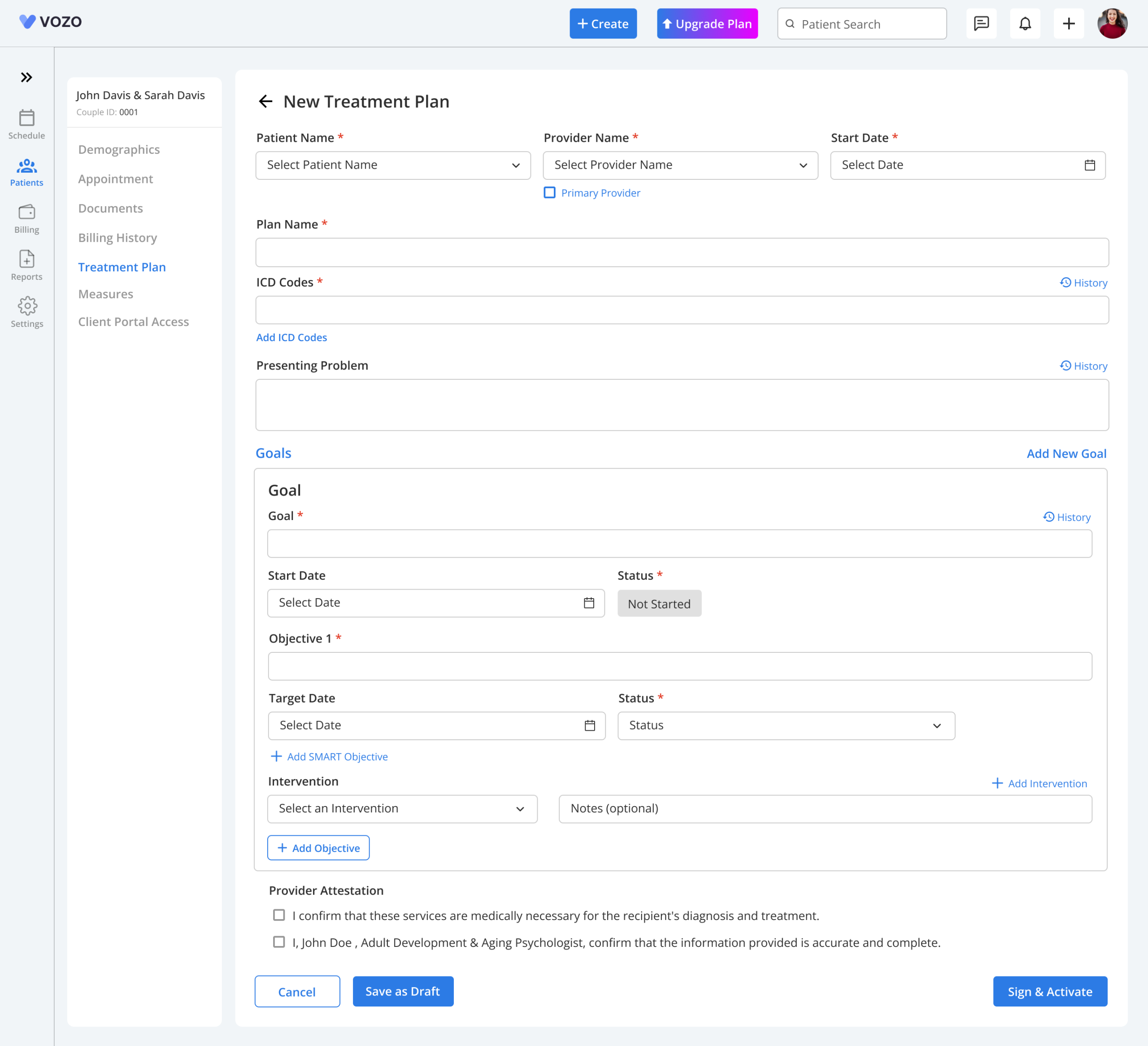
Person-Centered ISP Tracking
Keep each person’s support goals, progress, services, and plan reviews connected throughout ongoing care.
- Track progress against individual ISP goals
- Connect daily notes to specific plan objectives
- Monitor annual and interim plan-review dates
DSP Shift & Support Documentation
Direct support professionals document daily support across shifts and locations without duplicating the same information twice.
- Shift-based notes for residential and day programs
- Activities of daily living and functional-skills tracking
- Consistent documentation across staff members
HCBS Waiver Authorization Tracking
Keep waiver authorization details accessible so teams can monitor approved services, dates, and unit limits.
- Track authorized and delivered units by service
- Monitor authorization periods and remaining units
- Organize service history for reauthorization
Behavior Support Plan & Incident Tracking
Give staff a consistent way to access behavior support information and document incidents across service locations.
- Behavior support plans connected to the individual record
- Configurable incident-reporting templates
- Follow-up tasks and review documentation
Built Around Lifespan IDD Support Workflows
- Scheduling
- Telehealth
- Patient Engagement
- Billing and Payments
- Documentation
Coordinate Services Across Programs and Locations
Keep staffing coverage visible across group homes, day programs, and community-based services.
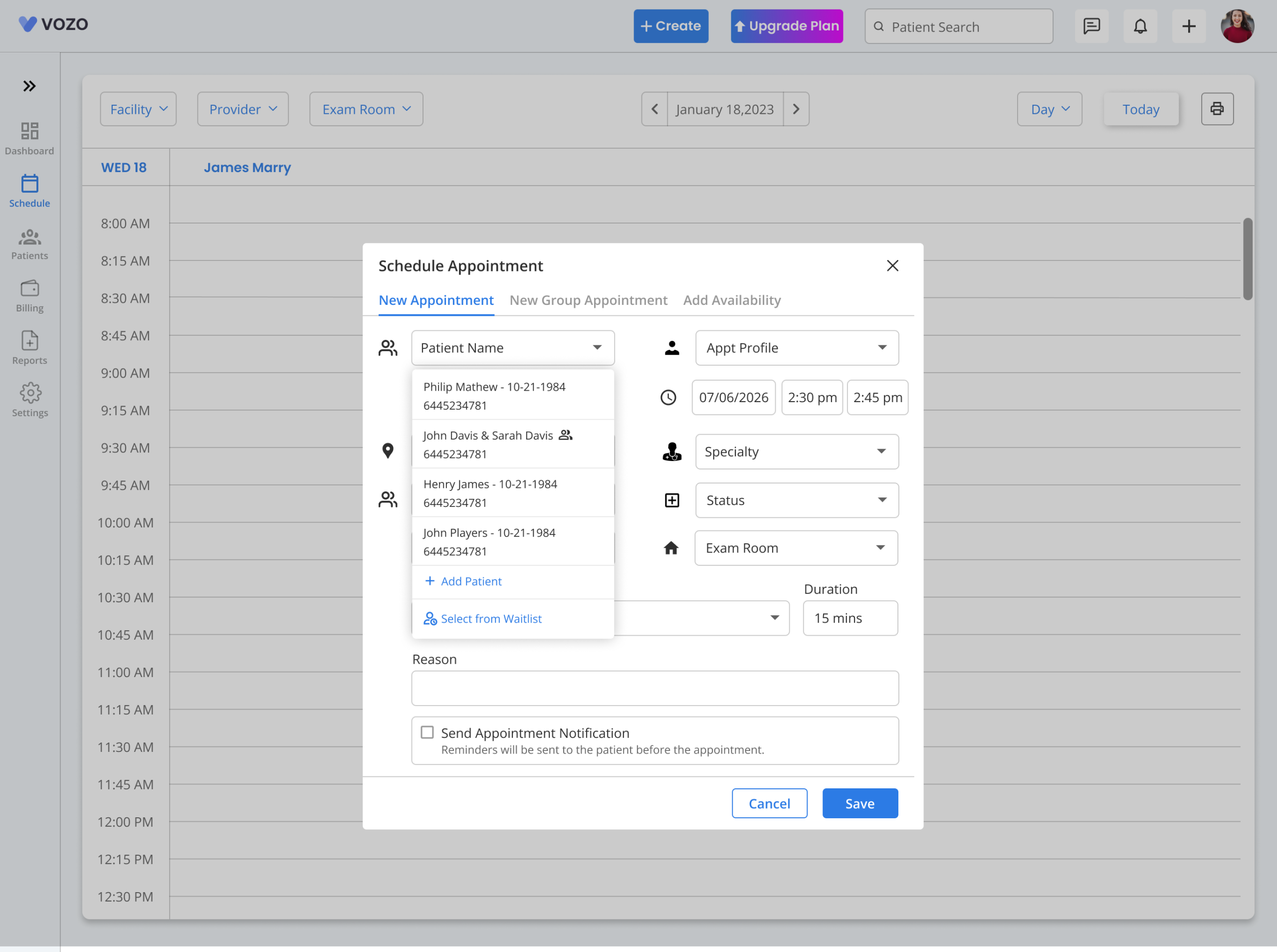
- Schedule services across residential and day programs
- Coordinate DSP assignments and recurring shifts
- Manage community-based appointments and activities
- Keep scheduled services connected to individual records
Remote Check-Ins for Individuals and Guardians
Keep individuals, guardians, clinicians, and support teams connected when an in-person meeting is not required.
- HIPAA-compliant video for guardian check-ins and care conferences
- Remote behavioral and psychiatric consultation support
- Telehealth visit notes synced directly to the ISP record
- Secure file sharing for care plans and supporting documents
Keep Individuals, Guardians, and Families Informed
Give guardians and families visibility into support plans, progress, and care-team communication.
- Guardian and family portal access to ISP goals and progress notes
- Secure messaging with the care coordination team
- Person-centered planning input from families and clients
- Community integration and outing logs shareable with guardians
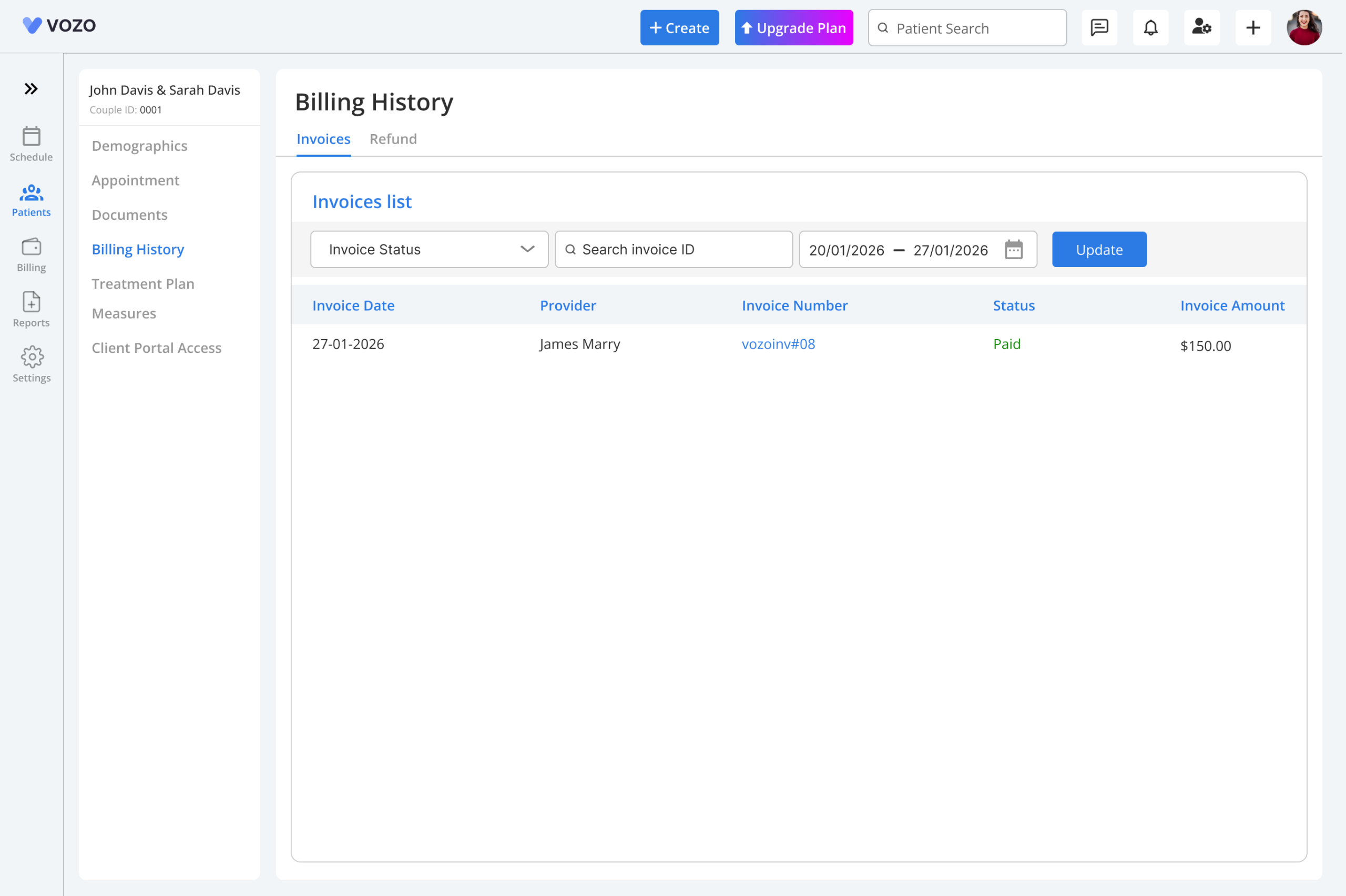
Connect HCBS Services With Billing Workflows
Use billing software for neurodevelopmental practices to organize delivered services, authorization information, claims, payments, and follow-up activities.
- Support Medicaid and HCBS billing workflows
- Connect service documentation with claim preparation
- Compare authorized, delivered, and billed units
- Track claim status, denials, payments, and balances
Support Notes Connected to Individual Goals
Use clinical documentation software for neurodevelopmental practices to connect daily services, individual goals, staff observations, incidents, and plan updates.
- Daily service and DSP shift-note templates
- Notes connected to ISP goals and objectives
- Adaptive and functional-skills documentation
- Behavior support and incident records
Trusted by Practices Nationwide
Helping Behavioral Health Practices Deliver High-Quality Care
Behavioral health practices rely on VOZO’s EHR software to improve clinical quality, enhance documentation accuracy, and operate sustainably.
Who We Serve
IDD Service Coordinators
Group Home & Residential Providers
Day Program Administrators
Direct Support Professionals
How it works
3-Step Onboarding
From Sign-Up to Your First Support Plan Review
Get your support plans, DSP documentation, service workflows, and billing configured from day one.
1
Bring Your Records Over
Import individuals, support plans, authorizations, guardians, and existing service information.
2
Set Up Your IDD Workflow
Configure support notes, staffing, plan tracking, incidents, services, and billing.
3
Start Supporting Individuals
Begin documenting services, tracking goals, coordinating staff, and monitoring support-plan progress.
Testimonials
Success Stories From Our Users
What IDD Providers Say About Vozo
“We used to track waiver units separately from daily support documentation. With Vozo, staff can see service information alongside the record, so it’s easier to know where each person stands.”
— Teresa Nakamura, IDD Program Director
“Shift handoffs used to mean checking separate logs before starting work. Now incoming DSPs can review the latest support note directly in the record and understand what happened during the previous shift.”
— Devon Marsh, Residential Services Coordinator
Blogs & Resources
Resources to Help Your Practice Grow
Case Management Documentation Guide
Learn how to document support needs, interventions, caregiver involvement, care-plan goals, outcomes, and follow-up while supporting Medicare and Medicaid documentation requirements.
Case Management Care Planning Guide
Explore how connected care plans, task ownership, referrals, follow-ups, permissions, scheduling, and billing can support coordinated long-term services.
FAQ
What Behavioral Health Providers Ask Us Most
Adaptive functioning refers to the conceptual, social, and practical skills a person uses in everyday life. These may include communication, self-care, safety, money management, relationships, and routines. IDD teams assess these areas to understand the person’s support needs rather than focusing only on an intellectual score or diagnosis.
Person-centered planning starts with the person’s own goals, choices, strengths, and support needs. In many Home and Community-Based Services (HCBS) programs, the plan also guides paid and unpaid supports. The record should show what matters to the person. It should also show who will help and when progress will be reviewed.
Providers should not assume that every change in behavior, mood, sleep, appetite, communication, or daily functioning results from an existing disability. Comparing new concerns with the person’s usual baseline can help teams recognize pain, illness, medication effects, mental health concerns, or environmental changes that need separate evaluation.
The record should explain how the person communicates, understands information, expresses consent, and signals discomfort. Clinical documentation software for neurodevelopmental practices can organize preferred language, communication devices, visual supports, response time, sensory preferences, triggers, and helpful accommodations in an accessible part of the record.
Documentation should identify the decisions for which support is requested, the people selected to provide assistance, and the person’s preferred communication process. It should also distinguish supported decision-making from guardianship or other legal authority. Applicable laws and documentation requirements may differ by state.
Service records commonly identify the individual, service provided, date, location, staff member, duration or units, related plan goal, response, and follow-up. IDD EHR software should allow organizations to configure documentation around their state, waiver, payer, authorization, and electronic visit verification requirements.
An intellectual and developmental disabilities EMR software workflow can keep recent support notes, incidents, health changes, completed activities, and follow-up tasks accessible to authorized incoming staff. Consistent handoff information reduces reliance on separate notebooks, verbal updates, or disconnected spreadsheets across residential and day-program settings.
Yes. Vozo EHR can organize schedules, tasks, notes, referrals, and follow-up activities in one system. Using connected neurodevelopmental EMR software helps clinicians, coordinators, and authorized support staff understand their responsibilities while maintaining role-appropriate access to the individual’s information.
Organizations should compare pricing with documentation flexibility, user access, scheduling, billing, reporting, security, support, and implementation needs. Vozo EHR offers affordable plans starting as low as $25 per month, while its IDD practice management software capabilities can support growing operational requirements.
Vozo EHR Premium includes referral-management capabilities for coordinating medical, behavioral health, therapy, and community services. Teams can record the reason for a referral, receiving organization, status, important dates, responses, and assigned follow-up tasks without maintaining a separate referral-tracking sheet.
Keep Every Service Connected to the Person’s Plan
Bring support plans, DSP documentation, service authorizations, incident records, scheduling, and billing together in one connected EHR.