
How SMART Goal Tracking Improves Clinical Outcomes and Documentation Quality
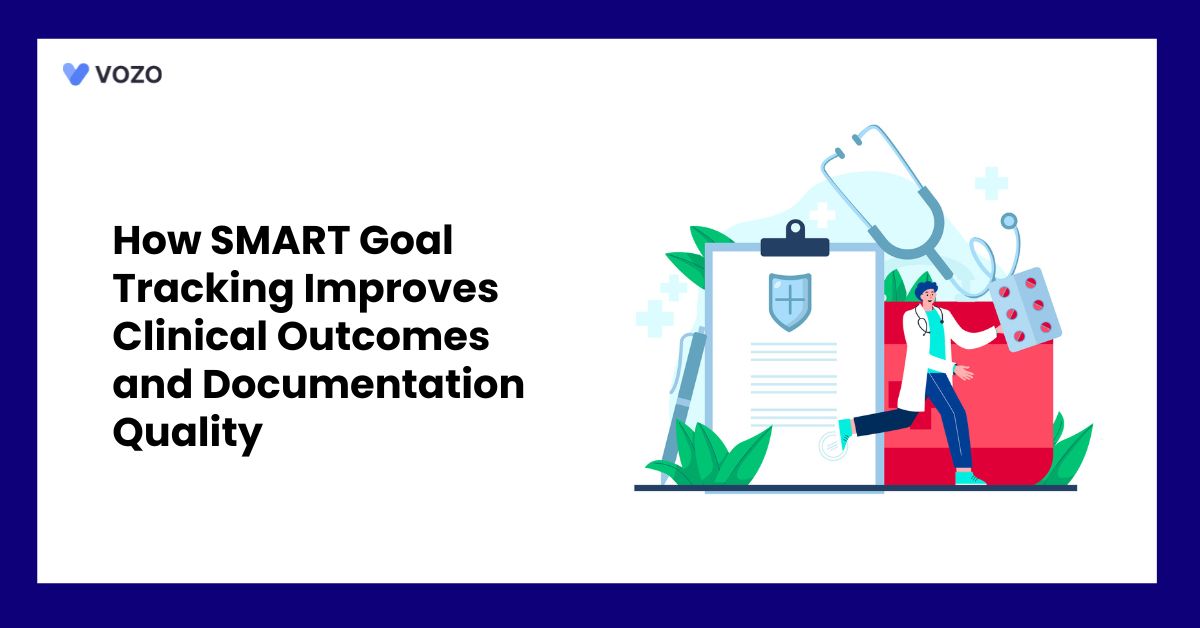
The adoption of SMART goals is an important component of good care planning. In therapeutic practice, SMART goal-setting offers a clear framework for establishing treatment goals and monitoring advancement. By requiring that each goal be clearly stated and outcome-oriented, clinicians and care teams make sure that treatment plans transition from nebulous intents to concrete, achievable targets.
For instance, a SMART care goal can outline who will finish what, when, and how success will be assessed. By coordinating treatment plans with patient preferences, evidence-based therapies, and the structured data capabilities of a Cloud EHR, this clarity creates the foundation for quantifiable improvements. In this blog post, we’ll share how SMART goal tracking strengthens both clinical outcomes and documentation quality.
What Are SMART Goals in Healthcare
Healthcare organizations constantly strive to transform broad aspirations (“improve patient mobility”) into actionable plans that can be measured. The SMART framework:
- Specific
- Measurable
- Achievable
- Relevant, and
- Time‑bound—provides a structured way to do this.
Use the SMART technique to create goals that are effective. These goals should include information about who will be involved, what will be done, when and where treatment will take place, and how progress will be evaluated. Determining who should measure the goal, the conditions under which it should take place, the degree of assistance offered, and the quantity of cues or compensatory methods allowed are all examples of measurement factors.
For goals to be anchored to an appropriate timeframe and for short-term actions to support longer-term objectives, a time element must be stated. Because they allow for quantifiable aims, track progress, and offer clarity and incentive, SMART goals are crucial for health and rehabilitation.
Specific, quantitative, and time-bound objectives make it easier to build action plans, improve communication, and track progress; ambiguous goals are less effective. Essentially, the SMART framework transforms care plans from imprecise aims to specific instructions.
Why SMART Goal Tracking Matters More Than Ever
SMART goal monitoring is an essential skill for modern clinical operations, as the healthcare business has shifted to prioritize precision, accountability, and quantitative outcomes.
Structured goal monitoring provides the data foundation required for evidence-based treatment and value-based reimbursement as operational, financial, and regulatory demands rise.
1. Value-Based Care Requires Quantifiable Outcomes
Healthcare organizations must now demonstrate measurable improvements rather than the volume of services.
- 62% of doctors report feeling additional pressure to record data for reimbursement.
- Structured goal metrics are critical for systems such as MIPS, UDS+, ACOs, PCMH, and state Medicaid models.
- SMART goals turn clinical purpose into facts that can be reported, audited, and risk-adjusted.
2. Increasing Clinical Complexity Demands Standardization
Interdisciplinary treatment demands careful coordination, as does multimorbidity.
- Approximately 70% of patients with long-term conditions receive treatment from several different doctors.
- Without SMART goals, variations in care plans result in inconsistent treatments and poor continuity.
- For teams made up of physicians, therapists, nurses, and care managers, SMART monitoring creates uniform performance standards.
3. Digital Health and EHR Automation Depend on Structured Goals
Modern EHRs rely on codified goal data for:
- Outcome dashboards & PROM/PREM mapping
- Automated alerts for stalled progress
- Predictive analytics to detect risk sooner
- AI-assisted documentation that pulls goal-based metrics into progress notes
This requires goals that are measurable, time-bound, and standardized—not free-text intentions.
4. Patient Engagement Expectations Have Evolved
- Goal clarity can increase adherence in chronic care programs by as much as 35%.
- Patients want measurable outcomes, verifiable benchmarks, and an understanding of their treatment strategy.
How SMART Goal Tracking Improves Clinical Outcomes and Documentation Quality
1. Enhances care precision and treatment effectiveness
SMART goals require clinicians to describe exactly what they aim to achieve, under what conditions, and by when. According to speech-language pathology training, using the SMART structure simplifies treatment planning and results in sessions that are both flexible and focused.
- Goal-oriented therapy produces observable gains. According to a study review, 65% of weight-management trials that used SMART targets achieved weight reduction or improved eating behaviours.
- Setting SMART goals resulted in clinically significant decreases in A1c and fewer medication modifications.
- Specific, quantifiable goals help to enhance health behaviors such as exercise and self-management.
- These findings suggest that goal clarity reduces clinical emphasis, leading to more specialized and efficient therapies.
2. Enables early intervention through measurable milestones
Goal‑tracking frameworks incorporate objective measures and regular review so that clinicians can detect stagnation or decline. Training materials for therapists emphasize that objective measures provide evidence of clinical outcomes, redirect treatment as symptoms change, and outline the need for goal modification.
The Illness Management and Recovery program included a collaborative goal-tracking sheet to support mental health rehabilitation. Participants were encouraged to pick up where they left off and given guidance in creating more precise goals. By concentrating on short-term objectives, clinicians can swiftly modify therapies to keep patients on course.
3. Strengthens patient engagement and accountability
Person‑centred care necessitates that goals resonate with the patient. SMART goals give patients with a shared vocabulary for knowing what is required of them and why. Setting goals enhances involvement, compliance, and health results.
Therapeutic frameworks highlight how SMART goals help patients stay committed by creating clarity and improving session focus.
Goal-tracking dashboards offer comprehensive summaries and trend analysis, while digital care-planning platforms enable family members to monitor the achievement of goals and provide progress comments. If patients and their support networks can monitor their progress in real time, they are more likely to take charge of their care.
4. Drives better interdisciplinary care coordination
Value-based care involves practitioners working together to manage general health. Physicians and other healthcare professionals coordinate treatment across practices by attending to both medical and non-medical issues and focusing on the individual as a whole.
By allowing physicians, therapists, nurses, and social workers to assess progress toward shared goals, coordinated goal-tracking systems reduce repetitive work and ensure that all disciplines align interventions with the same end purpose. Person-centered software platforms allow several family members and caregivers to input notes and track outcomes, improving communication and continuity across settings.
5. Clear, structured progress notes and reduced documentation variability
Progress notes provide a chronological account of the patient’s care. In addition to providing a framework for regular communication with other providers, progress notes are essential for tracking client progress.
- Training resources for speech-language pathology.
- It is important to note that documentation must be precise and succinct, including patient reactions, modalities used, length of care, and causes of stagnation.
- Precise notes lessen the danger of malpractice, encourage prompt payment, and promote high-quality care.
- Precise recordkeeping reduces the likelihood of errors and ensures continuity when patients move providers.
Clinicians should minimize unclear language and organize progress notes around objective milestones, utilizing SMART goals as anchors. This reduces provider variability while ensuring that critical information is consistently recorded.
6. Documentation that aligns with clinical standards and compliance requirements
Integrity programs claim that thorough notes and clear clinical documentation enhance patient care and guarantee equitable reimbursement. Accurate documentation is necessary for quality assurance and utilization review, promotes attending physician supervision, facilitates communication with other professionals, and offers neutral evidence.
Medical records must contain a thorough account of a patient’s medical history and treatments; precise documentation guarantees that all healthcare professionals are aware of the patient’s needs and minimizes mistakes during handoffs. It also shows that adequate paperwork that satisfies legal standards is included with correct coding and billing. In conformity with clinical and legal criteria, SMART goal monitoring ensures that paperwork includes quantifiable standards, timelines, and explanations.
7. Improves coding accuracy & reimbursement integrity
Payers rely on precise clinical terminology and tagged data to determine the appropriate reimbursement.
- Clear documentation supports accurate coding and invoicing, which helps companies avoid rejections and get the appropriate reimbursements.
- Comprehensive notes reduce the risk of under-coding, which leads to unpaid claims.
- At every level, from the point of care to the filing of claims, accurate documentation and coding are required to avoid denials and revenue loss.
- Clinical documentation that documents secondary diagnoses and associates them with relevant codes can have a significant impact on risk-adjustment scores and reimbursement.
SMART goal monitoring offers the detail required for proper categorization and facilitates equitable reimbursement by defining objectives with quantifiable results and documenting the activities used to accomplish them.
8. Supports value‑based care & improved health outcomes
Value-based care places a strong emphasis on person-centered, integrated care that enhances health outcomes. Value-based care, according to CMS, promotes medical professionals to treat patients as complete individuals, coordinating treatments and attending to their social, emotional, and physical needs. Health and social results are improved when objectives and treatment plans are customized to a person’s priorities.
By connecting daily clinical actions to broader objectives evaluated in value-based programs, such as functional status, symptom reduction, patient experience, and cost, SMART goal monitoring is consistent with these ideas. When goals are linked to specified outcome indicators, organizations can demonstrate progress in pay-for-performance initiatives and quality programs (for example, MIPS, UDS+, and ACO reporting).
9. Ensures continuity during provider handoffs
Handoffs are susceptible locations for data loss. Complete summaries of the patient’s medical history and therapies are included in accurate medical records, guaranteeing that all healthcare professionals involved in the patient’s care have a complete understanding.
These records help patients avoid losing important information during transitions, especially those with chronic illnesses or those changing doctors.
Complete documentation facilitates communication with other practitioners and guarantees oversight by attending physicians. Clinicians create a plan to ensure safe handoffs and continuity of treatment by arranging paperwork around SMART goals and tracking progress.
SMART Goal Tracking in EHRs and Clinical Workflows
1. Digital SMART Goal Templates in EHRs
Modern EHRs have standardized templates for exams, progress notes, and goal tracking, in addition to note storage. EMR technology influences the efficiency of evaluations, the speed with which documentation is completed, and the effectiveness with which physicians track patient progress. It recommends choosing systems with
- Documentation templates
- Integrated outcome measures, and
- Visual goal‑tracking tools.
Effective systems should provide structured SOAP, evaluation, and treatment templates, built‑in outcome measures and goal tracking, and seamless billing tied to documentation.
Built‑in templates ensure goals are captured in a standardized manner, with fields for specifics, measures, timeframes, and interventions, reducing variability and aiding compliance.
2. Real-Time Progress Monitoring Tools
Electronic dashboards help teams and patients monitor goal attainment. Therapy‑focused EHRs often include outcomes tracking and analytics dashboards that display patient progress and highlight when goals need to be revised. Person‑centred care platforms provide goal‑tracking dashboards with charts that track trends and analyze how each resident’s goals are performing.
In addition to creating customisable charts and visual progress reports, mental health EHRs offer integrated outcome measures that are digitally administered, instantly scored, and integrated into the client’s chart. These methods allow doctors to quickly determine whether goals are being met and to act quickly when development pauses.
3. Integration With Outcome Measures & Clinical Quality Metrics
Evidence‑based practice requires routine outcome monitoring and measurement‑based care. EHRs for mental health should make it simple to regularly monitor results, offer validated tests (such the GAD-7 and PHQ-9), grade results automatically, and create charts.
Clinicians can schedule these tests at any time, send out reminders, and have the results automatically included to progress notes with some systems. EHRs for physical therapy incorporate analytics dashboards and result monitoring to connect goal achievement to quality measures. Organizations can track progress toward value-based reporting and continuous improvement programs by linking SMART goals to standardized outcome measurements (PROMs, HEDIS, or other clinical quality indicators).
4. Automation for Better Documentation & Task Management
Automation lowers the administrative burden of paperwork and improves accuracy. Artificial intelligence is incorporated into modern EMR systems to facilitate documentation and integrate billing and scheduling, which reduces errors and saves time.
AI-powered scribes can sit atop the EHR interface and produce structured SOAP notes when therapists dictate or summarize interactions in physical therapy EHRs.
EHRs automate routine tasks such as:
- Sending and scoring outcome measures
- Tracking homework assignments, and
- Reminding clinicians to document evidence‑based techniques.
By employing digital forms and integrated data verification to ensure that documentation is comprehensive, compliant, and centrally maintained, accuracy and efficiency are increased. Revenue-cycle management software’s automated alerts and dashboards assist managers in locating and preventing the main reasons why claims are rejected.
Automation guarantees that important fields are filled out and that actions (such as follow-ups and reassessments) are scheduled automatically when combined with SMART goal templates.
Vozo All-In-One Cloud EHR for Healthcare Practices
From managing and organizing patient health records digitally to reducing medical errors, it significantly empowers providers to improve healthcare quality.
If you are searching for the best EHR system for your healthcare practice, Vozo EHR can be your go-to choice. Our comprehensive EHR solution lets you focus more on patient care while carrying all the burdens and simplifying them.
- Vozo Cloud EHR’s cost-effective cloud subscription benefits all levels of practice.
- Our feature-rich EHR helps you rectify mistakes efficiently and speed up the process.
- Vozo Specialty EHR aligns with the needs and requirements of specialty practices.
- Our expert technical team is available 24/7 to cover any needs that may arise.
- Our EHR System continues to scale as your healthcare practice grows, improving the user experience.
The Vozo Customized EHR solution benefits your healthcare practice by:
- Streamlining the administrative process
- Improving workflow efficiency
- Reducing proneness to errors
- Managing all the patients’ records in one place
- Offers greater efficiency and cost savings across the board
Our specialty-specific tools, such as scheduling, patient portals, lab integration, cloud hosting, and more, meet the specific needs and requirements of your healthcare practice.
“Embrace Vozo EHR to reduce your burdens and enhance patient care”.
About the author
Lara Dixit


Lara Dixit is a Senior Business Manager at Vozo Health, specializing in EHR platforms, practice management, billing, and revenue cycle optimization. She helps healthcare providers improve operational efficiency, streamline workflows, and drive sustainable practice growth. At Vozo Health, she focuses on business strategy, healthcare automation, and scalable growth for modern medical practices.