
Vozohealth

Built for Every ABA Session

Applied Behavior Analysis EHR Software for Data-Driven Care

Connect behavior data, treatment targets, session notes, caregiver training, scheduling, supervision, and billing with EHR software for ABA therapy practices.

What ABA Practices Need From ABA EHR Software

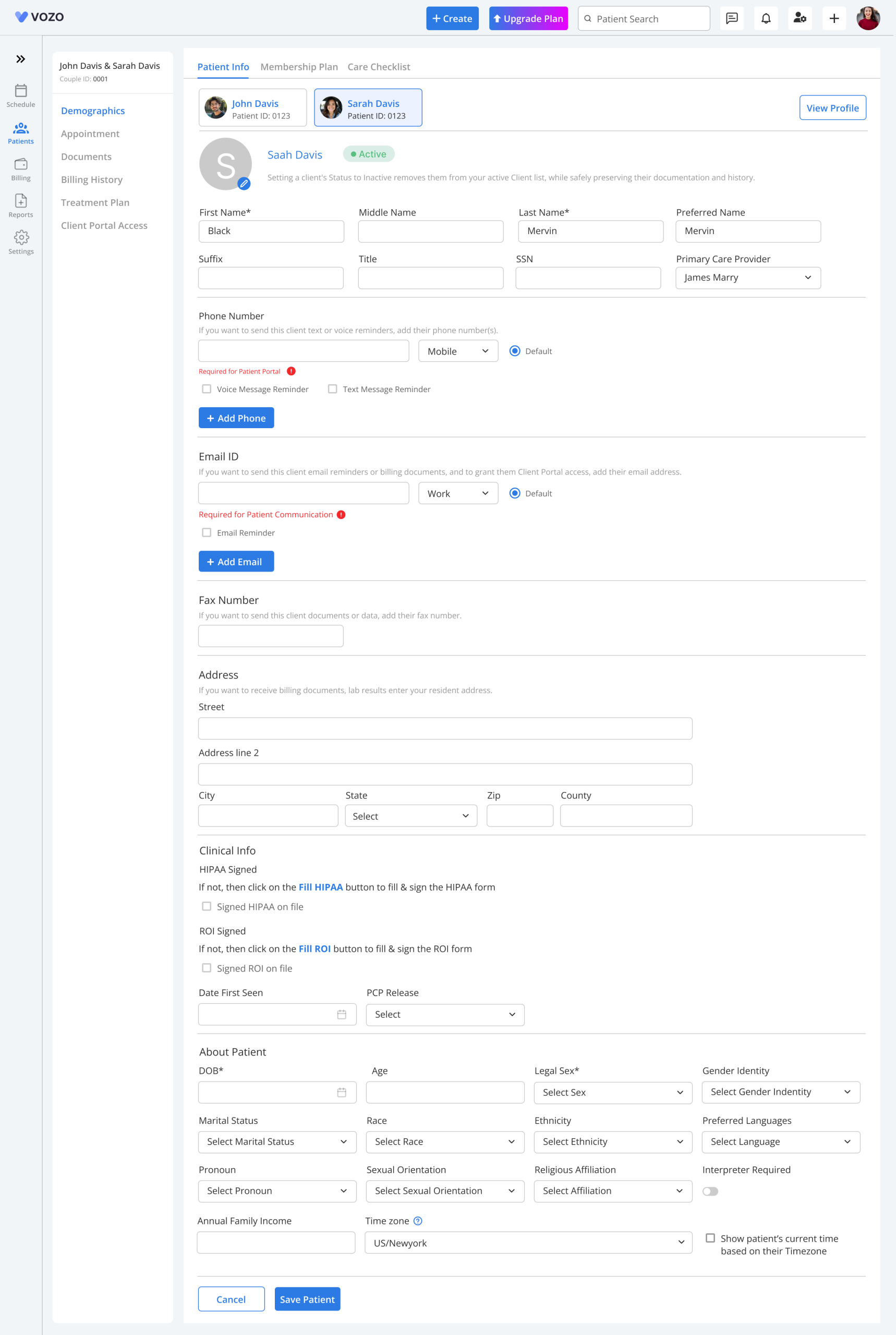
Family therapy clinical documentation
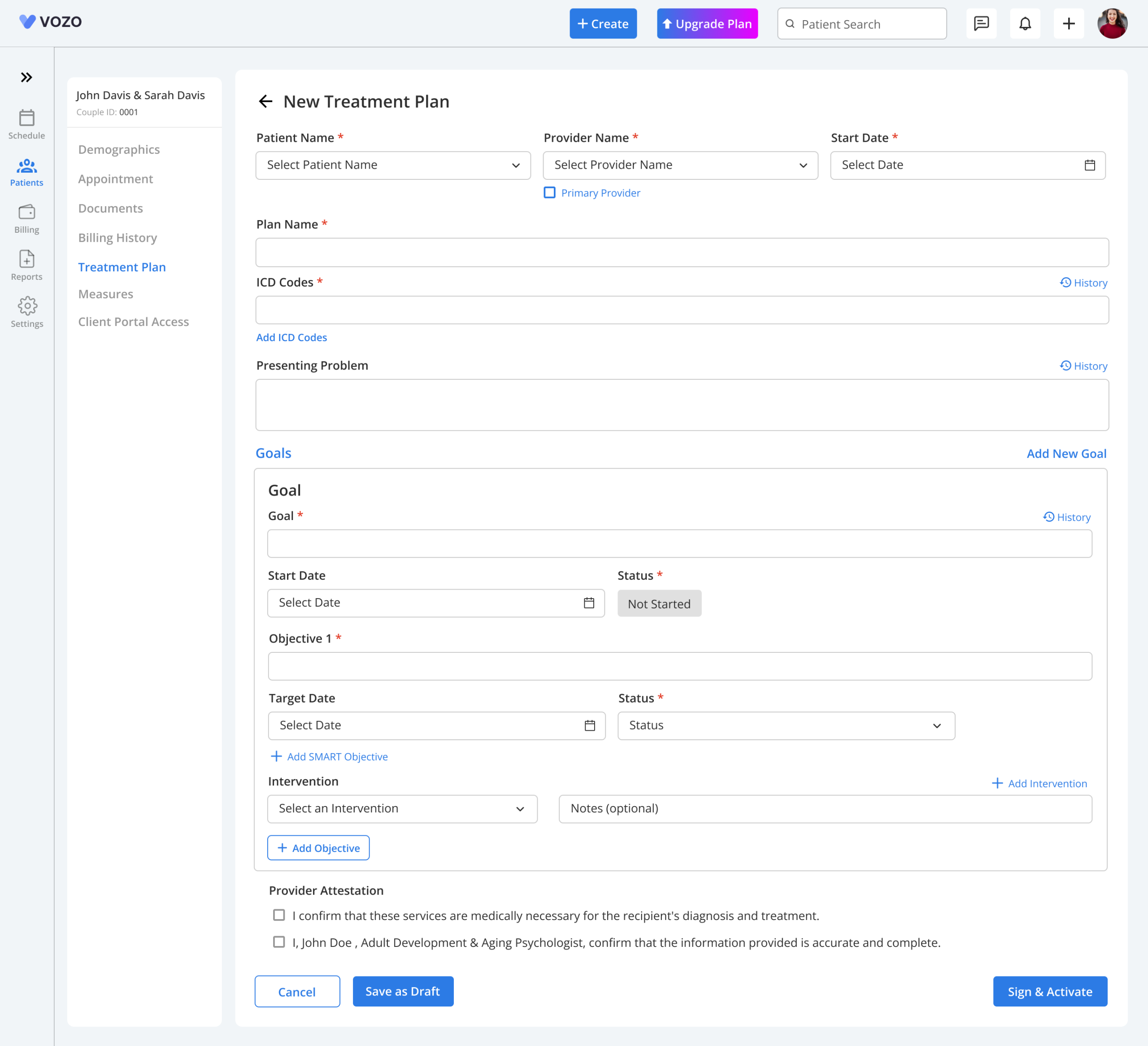
Family therapy treatment planning
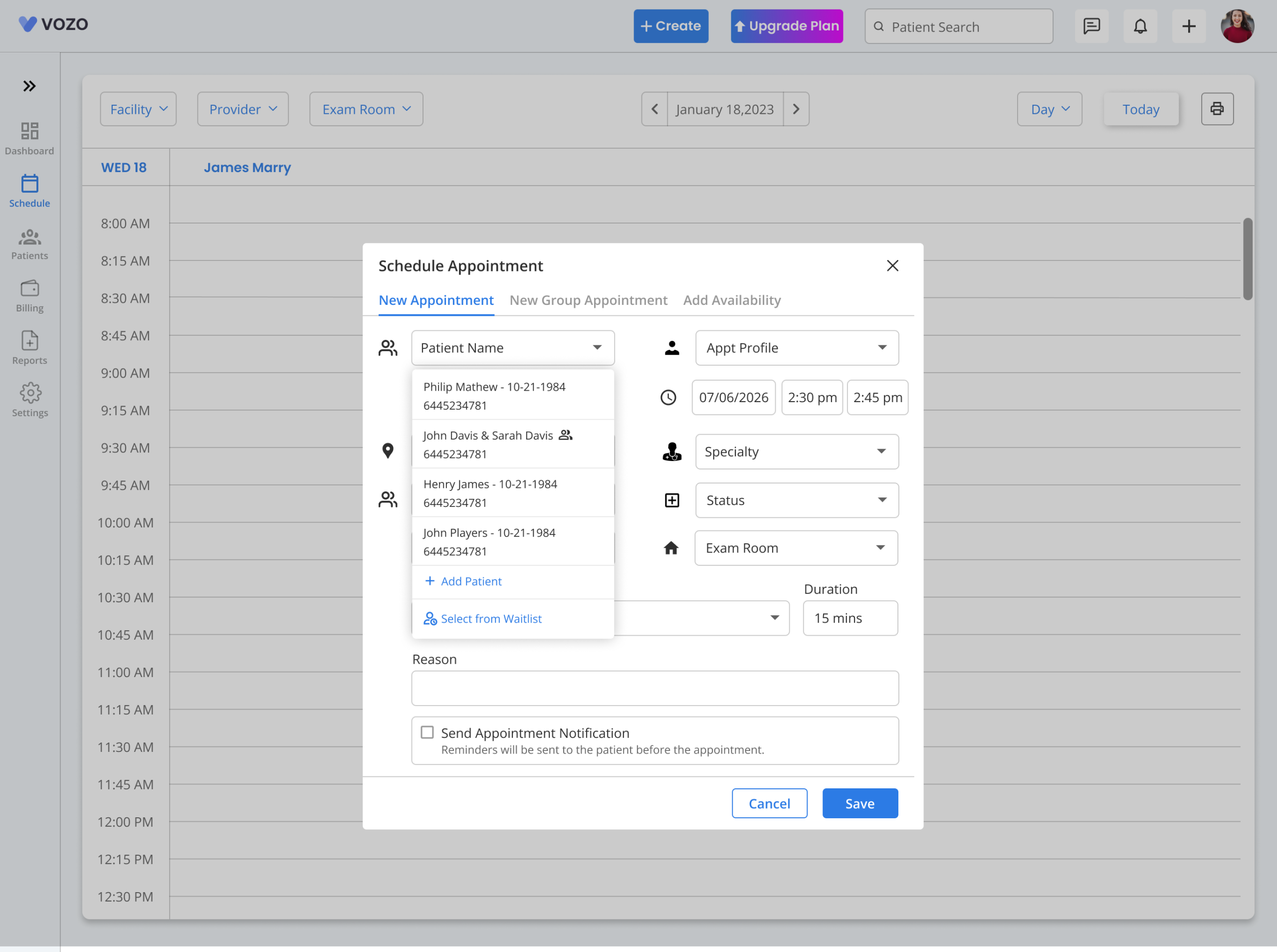
Family therapy scheduling and billing
Family therapy telehealth
01 04
Family therapy clinical documentation

Behavior Data and Session Documentation

Capture behavioral observations and session data within the client record instead of maintaining disconnected paper forms and spreadsheets.

  • Customizable discrete-trial and ABC data forms
  • Behavior targets connected to treatment goals
  • Session data available for clinical review
Family therapy treatment planning

RBT and BCBA Workflows

Use BCBA EHR software to keep staff assignments, session documentation, supervisory review, and follow-up tasks within one workflow.

  • Supervision hour tracking tied to BACB requirements
  • Session note review and co-sign workflow for BCBAs
  • Caseload assignment across RBTs and supervisors
Family therapy scheduling and billing

Authorization and Service Tracking

Keep authorization details accessible when scheduling services, documenting sessions, and preparing billing information.

  • Authorization dates and approved-service information
  • Session history available for utilization review
  • Follow-up tasks for upcoming authorization deadlines
Family therapy telehealth

CaregiverTraining Documentation

Document caregiver participation, training goals, strategies discussed, and follow-up activities alongside the client’s treatment plan.

  • Customizable caregiver-training notes
  • Home-program resources and assignments
  • Caregiver participation documented by session
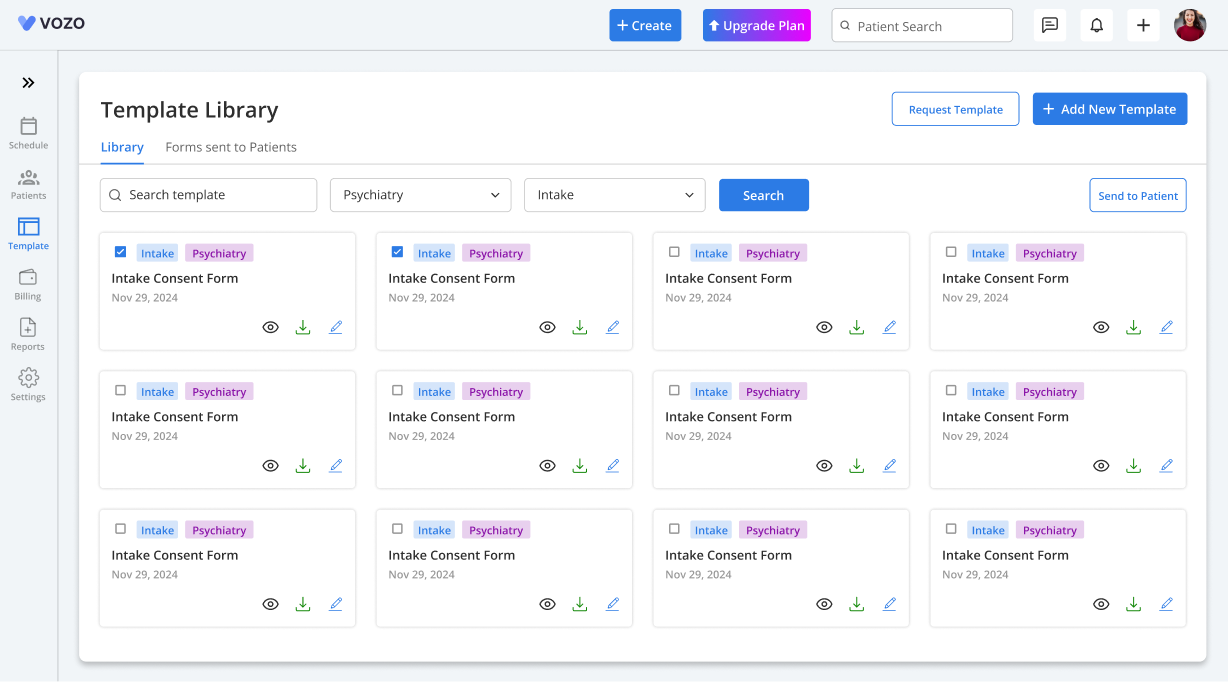
Support Every Part of the ABA Care Workflow

Scheduling for High-Frequency Sessions

Coordinate recurring sessions, multiple staff members, caregiver availability, and changing client schedules from one calendar.

  • Recurring weekly appointments
  • Provider and client calendars
  • Staff assignments by session
  • Automated appointment reminders
Virtual Care for Caregiver Training and Follow-Up

Use secure telehealth for appropriate caregiver-training sessions, consultations, treatment reviews, and follow-up appointments.

  • Secure video appointments
  • Screen sharing for resources and progress reviews
  • Virtual sessions connected to documentation
  • Caregiver participation recorded within the visit
Keep Caregivers Connected Between Sessions

Give authorized caregivers access to communication, appointments, forms, and shared resources without relying on separate systems.

  • Secure patient portal access
  • Digital intake and consent forms
  • Secure messaging between appointments
  • Home-program resources and follow-up activities
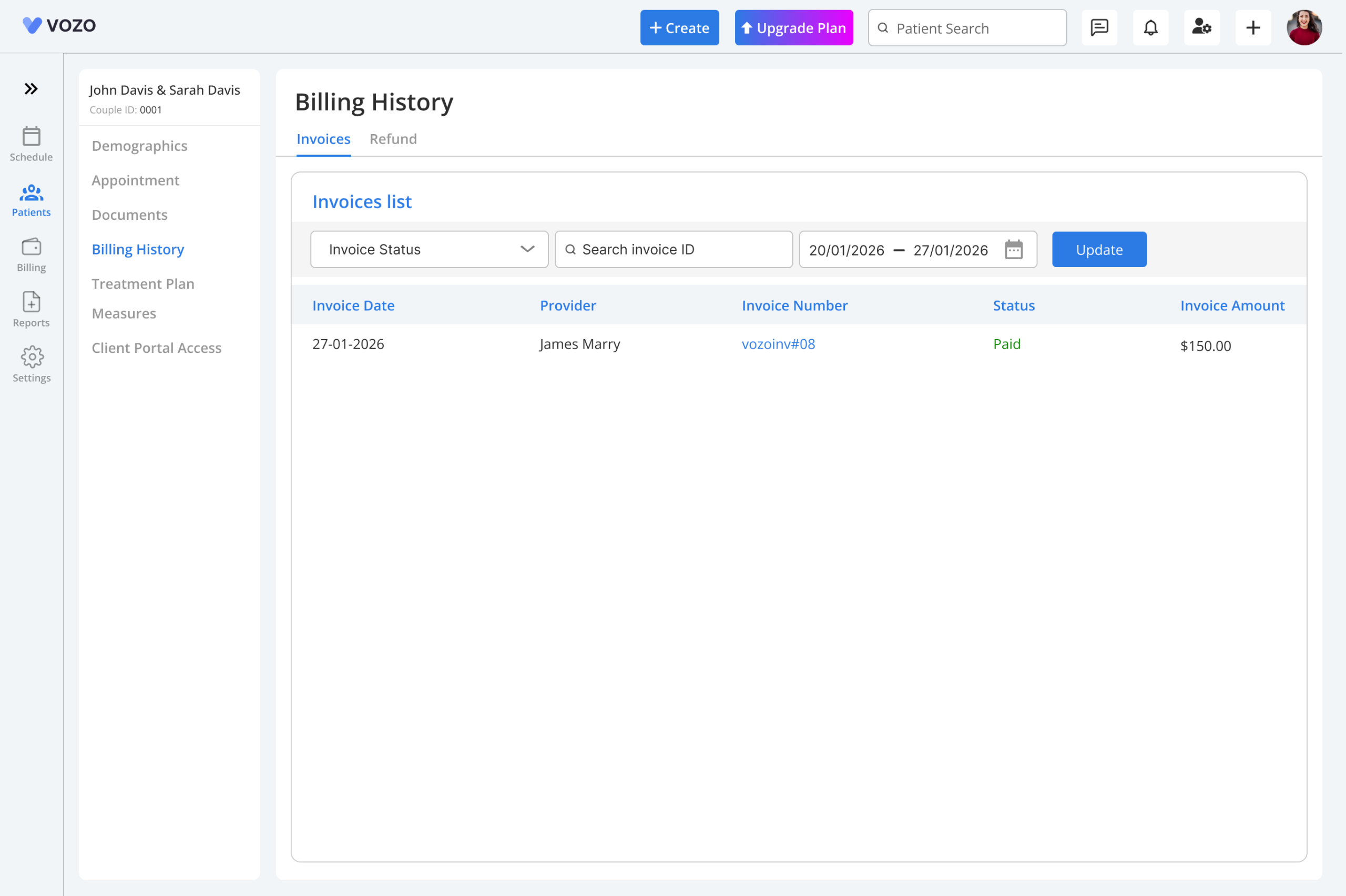
Connect ABA Billing With Session Documentation

Manage eligibility, claims, payments, and financial follow-up alongside the services documented in the client record.

  • Customizable billing codes for ABA services
  • Insurance eligibility verification
  • Electronic claim submission
  • ERA posting, payment tracking, and denial follow-up
Notes Built Around Trial-by-Trial Data

Use ABA treatment EHR software to document interventions, client responses, progress, caregiver participation, and next steps across recurring sessions.

  • Customizable session-note templates
  • Behavior targets and treatment goals
  • ABC and discrete-trial documentation fields
  • Progress notes connected to the treatment plan

Trusted by Practices Nationwide

Providers Supported
0 +
Patient Encounters Managed
0 k+
Support
0 /7
Platform Uptime
0 %

Helping Behavioral Health Practices Deliver High-Quality Care

Behavioral health practices rely on VOZO’s EHR software to improve clinical quality, enhance documentation accuracy, and operate sustainably.

Who We Serve

Board Certified Behavior Analysts (BCBAs)

Registered Behavior Technicians (RBTs) & Behavior Technicians

ABA Therapy Clinics

Autism & Developmental Disability Practices

How it works

3-Step Onboarding

From Sign-Up to Your First Session

Bring your existing information into Vozo, configure your workflow, and start documenting care with less setup friction.

1

Bring Your Existing Records

Move or add existing client information so your practice can continue with the records it needs.

2

Configure Your Workflow

Set up templates, documentation preferences, session types, scheduling, and billing around your practice.

3

Start Documenting Care

Schedule clients and begin managing sessions, documentation, and follow-up inside Vozo.

Testimonials

Success Stories From Our Users

What ABA Providers Are Saying About Vozo

“Our RBTs cut session documentation time by nearly 40% once trial data entered live instead of getting transcribed from paper afterward.”

— Dr. Priya Anand, BCBA

“I used to reconcile authorized hours against billed hours by hand every month. Now it’s tracked in real time, and I catch overages before they happen.”

— Jordan Michaels, BCBA-D

Blogs & Resources

Resources to Help Your Practice Grow

Treatment Goal and Progress Tracking

Learn how structured goal setting and progress tracking help behavioral health providers monitor measurable outcomes and keep treatment plans connected to ongoing care.

Behavioral Health EHR Selection Guide

Explore the essential EHR features behavioral health practices should evaluate, including documentation, treatment planning, billing, telehealth, security, and workflow support.

FAQ

What Behavioral Health Providers Ask Us Most

What is a Functional Behavior Assessment (FBA) in Applied Behavior Analysis?

A Functional Behavior Assessment helps clinicians understand the variables influencing a behavior. The assessment may consider antecedents, consequences, settings, frequency, duration, and information from caregivers or staff. A behavior analyst uses these findings to develop function-based interventions and appropriate replacement-skill goals.

What is the difference between skill acquisition and behavior reduction in ABA?

Skill-acquisition programs teach abilities such as communication, self-care, social interaction, or daily living skills. Behavior-reduction programs address behaviors that interfere with safety, learning, or participation while teaching suitable replacement skills. Both require measurable targets and ongoing review of the client’s response.

Why do Applied Behavior Analysis providers collect data during each session?

Session data helps providers determine whether an intervention is producing meaningful change. Depending on the target, teams may record frequency, duration, latency, task steps, trial responses, or level of assistance. Applied behavior analysis EHR software can help connect this information to treatment goals and clinical reviews.

How should caregiver training be documented in an ABA program?

Caregiver-training notes should identify the skill or strategy taught, the caregiver’s participation, practice completed during the session, feedback provided, and planned home follow-up. Documentation should remain connected to the client’s treatment goals and distinguish caregiver training from direct treatment delivered to the client.

How should BCBA supervision of Registered Behavior Technicians be documented?

Supervision records should identify the supervisor and technician, date and duration, service context, observation completed, feedback provided, competency areas reviewed, and any required follow-up. BCBA EHR software can help organize these records, but practices should confirm current BACB, state, employer, and payer requirements.

Which Current Procedural Terminology codes should ABA billing software support?

ABA billing workflows commonly need the adaptive behavior service code range from 97151 through 97158. The correct code depends on the service, provider role, participants, delivery format, time, authorization, and payer policy. The documentation and claim must accurately represent the service delivered.

How should ABA treatment changes be documented?

When a program changes, the record should identify the relevant data, clinical rationale, modification made, person authorizing the change, effective date, and instructions communicated to staff or caregivers. ABA treatment EHR software should preserve this history so the team can understand when, why, and how the intervention changed.

How can Vozo EHR help practices manage ABA authorizations?

Vozo EHR can help practices organize authorization dates, service details, appointments, tasks, clinical documentation, and billing information. Teams can use these connected workflows to monitor follow-up needs and prepare for reauthorization. Approved units, service limits, and payer-specific requirements should still be verified before scheduling or billing.

What should a private ABA practice look for when choosing an EHR?

The best EHR software for private ABA practices should support customizable session notes, treatment plans, recurring schedules, staff permissions, caregiver communication, authorization information, billing, and progress review. Practices should also confirm that the platform fits their data-collection method, payer mix, team structure, and reporting needs.

Is Vozo EHR affordable for a growing ABA practice?

Practices comparing affordable EHR for ABA providers can begin with Vozo EHR Basic for as low as $25 per month. As the practice grows, it can evaluate Premium capabilities such as customizable templates, eligibility checks, electronic claims, ERA posting, reporting, referral management, telehealth, and revenue cycle support.

Give Your ABA Team One Connected Workflow

Use all-in-one EHR and practice management software to run an ABA practice and connect sessions, treatment goals, caregiver communication, scheduling, and billing.

✓ Easy setup
✓ 14-day free trial
Launch login modal Launch register modal